
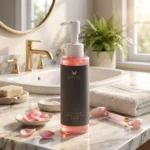
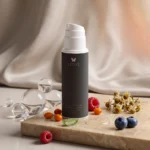
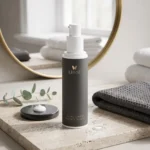

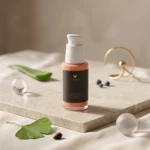




Navigating the delicate intersection of sensitive skin and signs of aging can feel like walking a tightrope, but achieving a radiant, youthful complexion without irritation is entirely possible with the right daily approach. The key lies in honoring your skin’s natural architecture rather than overwhelming it with aggressive synthetics, ensuring your daily ritual actively calms inflammation while supporting long-term cellular vitality.
At LIISSÉ, we believe true luxury is rooted in biocompatibility—formulating with clean, certified organic ingredients that work in harmony with your skin’s biology to restore comfort, smooth fine lines, and cultivate a luminous, resilient glow.
The Science: What Is Really Happening to Your Skin?
To understand why sensitive, aging skin requires a specialized approach, we must look closely at the epidermal lipid bilayers—the microscopic mortar between your skin cells that locks in moisture and keeps irritants out. As we age, this natural lipid matrix thins, leading to increased trans-epidermal water loss (TEWL), where vital hydration escapes into the air. Simultaneously, environmental stressors trigger matrix metalloproteinases (MMPs), enzymes that break down precious collagen and elastin fibers.
For sensitive skin, this barrier dysfunction is often compounded by a compromised microbiome biodiversity, meaning the beneficial microbes that naturally protect your skin’s surface are out of balance. When harsh ingredients disrupt this fragile ecosystem, micro-inflammation ensues. This chronic, low-grade inflammation not only causes redness and stinging but actually accelerates the aging process—a phenomenon dermatologists refer to as “inflamm-aging.” Repairing the skin barrier and soothing this micro-inflammation is therefore the most crucial first step in any anti-aging ritual.
Botanical Actives That Address This Concern
Discarding synthetic irritants does not mean compromising on efficacy. Modern green science has unlocked powerful, plant-based alternatives that rival traditional dermatological actives without the adverse side effects. Multi-molecular hyaluronic acid acts as a moisture sponge across different layers of the epidermis, drawing hydration deep into the tissue while plumping fine lines from within. To address firmness without triggering the retinoid-induced peeling common in sensitive skin, we turn to bakuchiol, a clinically proven botanical extract derived from the seeds of the Psoralea corylifolia plant that stimulates fibroblast collagen synthesis gently and effectively.
Furthermore, incorporating alteromonas ferment extract—a deep-sea marine exopolysaccharide—helps reinforce the skin’s defense systems against urban pollution while calming reactive nerve endings. Cold-pressed seed oils rich in essential fatty acids seamlessly integrate into the lipid barrier, while prebiotics nourish the microbiome, ensuring your skin remains balanced, calm, and exquisitely protected.
Your Step-by-Step AM & PM Ritual
- Step 1: Gentle Cleansing & Balancing: Begin your morning and evening ritual with a sulfate-free, pH-balanced milk or balm cleanser. Massage gently onto dry or damp skin to dissolve impurities without stripping the delicate lipid barrier, then rinse with lukewarm water and pat dry with a soft linen cloth.
- Step 2: Calming & Repairing Infusion: Apply a few drops of a botanical essence or serum infused with multi-molecular hyaluronic acid and soothing prebiotics. Gently press—never rub—into the face and neck to deeply hydrate the epidermal layers and restore microbiome harmony.
- Step 3: Barrier-Sealing & Protection: Lock in your hydration by applying a targeted treatment cream enriched with bakuchiol and cold-pressed seed oils to support collagen production and prevent trans-epidermal water loss. In the morning, always follow with a broad-spectrum, mineral-based UV protector.
Frequently Asked Questions
Q1: Can I use vitamin C if I have sensitive, aging skin?
A1: Yes, but you must choose the right derivative and concentration. Traditional L-ascorbic acid can be overly acidic and irritating for reactive skin. Instead, look for stable, lipid-soluble vitamin C derivatives like ascorbyl tetraisopalmitate, which deliver antioxidant protection and brighten skin tone without causing redness or disrupting the skin barrier.
Q2: How long does it take to see results from a natural, organic skincare routine?
A2: Because organic, ECOCERT-certified formulations work by supporting your skin’s natural biological processes rather than forcing aggressive cellular turnover, visible improvements in hydration and soothing typically occur within 14 days. Noticeable improvements in firmness and elasticity generally align with the skin’s natural 28-to-30-day desquamation cycle.
Q3: Why is avoiding synthetic fragrances so important for sensitive skin?
A3: Synthetic fragrances are among the leading causes of contact dermatitis and allergic sensitization in skincare. They consist of volatile compounds that easily penetrate a compromised epidermal barrier, triggering immune responses, micro-inflammation, and long-term sensitivity. Choosing strictly fragrance-free or naturally scented products derived entirely from pure botanical distillates preserves your skin’s health and integrity.